Explore the Crucial Services Provided by a Professional Arborist for Healthy Trees
A professional arborist delivers a variety of services essential for maintaining healthy trees and improving landscapes. Their material expertise in tree pruning encourages growth and lessens dangers. They also assess and handle tree diseases, ensuring tailored treatment plans are established - Florence Arborist. Additionally, arborists manage secure tree removal and aid in planting and transplanting. Their role is even more vital during urgent times such as storm damage. Knowing these services can significantly affect one’s approach to tree care
The Value of Tree Pruning
Although many homeowners may overlook the need for tree pruning, it serves a vital function in maintaining the health and aesthetics of trees. Effective pruning assists trees in building a robust structure, taking away dead or sick branches that could present dangers. By carefully cutting branches, the tree can focus its energy on healthy growth, promoting better air circulation and sunlight penetration. Additionally, pruning can improve the look of the tree, shaping it for aesthetic appeal in residential landscapes.
Moreover, regular pruning can avoid possible dangers, such as dropped branches during storms or high winds, which could harm property or injure individuals. It also aids in the prevention of insect problems and diseases by boosting the tree's resistance. Ultimately, investing in professional arborist services for tree pruning ensures trees stay healthy, safe, and visually pleasing, greatly contributing to the overall beauty and value of the property.
Diagnosing and Managing Tree Diseases
Tree health can be greatly compromised by different illnesses that may not always be immediately evident. A professional arborist plays an essential role in diagnosing these conditions early, utilizing a combination of visual inspections and assessment instruments. Symptoms such as discolored leaves, wilting, or irregular growth shapes often point to underlying wellness concerns. Arborists assess these symptoms to pinpoint particular diseases, whether fungal, bacterial, or viral in nature.
When the problem is identified, the arborist develops a bespoke care program. Such a strategy might incorporate specific applications, such as fungicides or bactericides, and cultural practices that boost the tree's resistance. Additionally, correct hydration, the application of mulch, and feeding can significantly boost tree health and defense against pathogens. Consistent observation and further interventions are necessary for effective management, ensuring the longevity and vigor of the trees. By taking a proactive approach to tree diseases, tree specialists ensure the beauty and ecological benefits that healthy trees offer.
Secure Methods for Tree Extraction
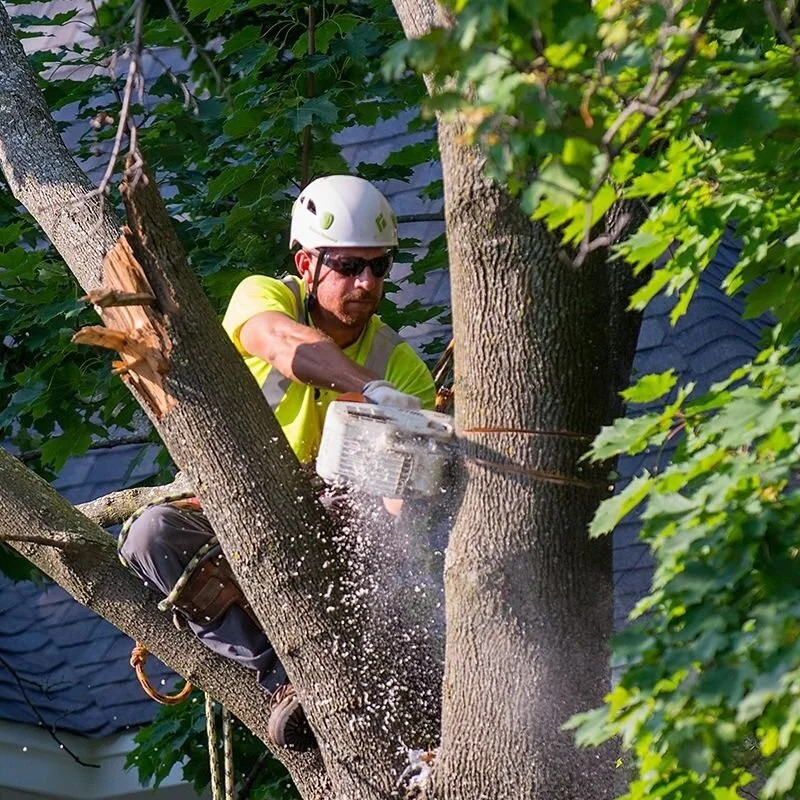
Effective tree removal practices are critical for securing the safety of the crew and limiting harm to adjacent areas. Professional arborists employ a thorough assessment of the tree's condition, its location, and the immediate vicinity before proceeding with removal. Professionals employ dedicated machinery, such as ropes and cutting tools, to guarantee precise cuts and maintain control while cutting down the tree.
A carefully designed extraction plan includes identifying potential hazards, such as structures or overhead wires, which can affect the security of the job. Professionals commonly utilize the process called "sectional dismantling," in which the tree is removed in small sections, minimizing the danger from falling material.
Furthermore, arborists adhere to local rules and standards to ensure adherence and ecological responsibility. Once the tree is down, thorough clearing and removal of the tree debris, stump removal being included, help improve the overall security and aesthetics of the property.
Planting and Transplanting Trees
Planting and transplanting trees requires careful consideration of site selection and planting techniques to guarantee long-term health and growth. The right location can greatly impact a tree's development, whereas good planting practices minimize stress and encourage the tree to thrive. Arborists emphasize these factors as vital for boosting the health and lifespan of trees in all environments.
Choosing the Right Location
Finding the perfect spot for relocating or establishing trees is essential for their long-term health and growth. Factors such as the condition of the soil, the amount of sun, and water flow needs careful consideration. Trained tree experts evaluate the location's features, to guarantee that the planting location has enough food sources and proper foundation for the trees. In addition, the nearness to established constructions and neighboring vegetation is crucial to avoid resource contention and prevent possible harm. Experts must also evaluate the tree’s full-grown dimensions and root structure, guaranteeing enough area for development. By conducting a thorough site analysis, these experts help clients reach educated conclusions that encourage strong, successful trees, thereby improving the landscape’s beauty and environmental worth.
Ideal Planting Techniques
Once the site has been carefully assessed and selected, the next step involves using optimal methods for planting trees. Proper preparation of the planting hole is vital; it should be two times wider than the root mass and not deeper than the root mass. It is necessary to set the tree in the hole so that the upper surface of the roots aligns with the surrounding soil. Fill the hole with local earth, ensuring there are no air pockets, and irrigate completely to help the roots settle in initially. Adding a layer of mulch near the trunk aids in water retention and suppress weeds. Florence Arborist. When relocating established trees, it’s important to minimize root disturbance and move the tree while it is inactive for the highest rate of success. Following these techniques encourages strong vitality and longevity
Arborist Action Following Severe Weather
When major tempests hit, the aftermath can leave trees in dangerous states, creating threats to buildings and people. Trained arborists are essential in crisis management, inspecting weather-damaged trees to gauge their soundness and condition. With their skill, they can discern which plants can be saved and which present immediate dangers that need to be taken down.
Armed with the right gear, they can carefully cut damaged boughs and haul away refuse, preventing subsequent injury to adjacent property. Arborists also offer helpful guidance on precautionary steps, such as picking durable tree varieties for future planting.
Apart from the initial cleanup, tree specialists assist clients in grasping the possible lasting consequences of the storm, providing advice for restoration and healing. Through quick and effective action, certified tree experts safeguard assets but also contribute to the restoration of the local environment following major weather events.
Nutrient Assistance and Earth Maintenance
Subsequent to storm damage, focus shifts to the condition of surviving trees, emphasizing the necessity of nutrient assistance and soil management. A qualified tree expert checks ground quality and tree health to determine exact dietary needs. Trees need key nourishment, including nitrogen, phosphorus, and potassium, to heal and grow strong post-stress incidents.
Earth maintenance is vital to how nutrients are accessed and the growth of roots. Tree specialists often suggest soil amendments, such as organic matter, to improve the ground's composition and microbial activity. Proper pH levels are also checked, as they affect nutrient uptake.
Incorporating mulching techniques can help the soil hold water and suppress weeds, creating an ideal environment for tree recovery. With a detailed feeding regimen and applying successful ground care techniques, arborists guarantee trees recover their vigor, resilience, and overall health, vital for keeping the environment stable in the wake of ecological disruptions.
Common Queries
How Often Should I Have My Trees Inspected?
Trees should ideally be inspected once a year for optimal condition. Nevertheless, more frequent evaluations might be required for younger trees, post-major weather incidents, or if distress or illness becomes apparent.
What Qualifications Should I Look for in an Arborist?
In your search for a tree expert, one should prioritize certifications like ISA (International Society of Arboriculture) accreditation, proven track record, insurance coverage, and a good standing locally, guaranteeing skill in arboriculture and safety practices.
Are There Specific Tools Arborists Use for Tree Care?
Arborists employ various specialized tools for tree care, such as chainsaws, pruning shears, climbing gear, and stump grinders. Each tool serves a specific purpose, allowing for proper upkeep, pruning, and removal of trees while promoting overall health and safety.
In What Ways Does the Weather Impact Tree Health?
The climate significantly affects tree health; too much water often causes root rot, while dry spells put strain on trees. Very high or low temperatures can lead to the destruction of leaves and branches, consequently impacting growth, sturdiness, and total vitality of the trees.
Should I handle my own tree maintenance, or Should I Hire a Professional?
Although certain simple tree maintenance jobs are manageable by homeowners, hiring a professional is often advisable - Florence Arborist. Specialists are equipped with unique expertise and gear, making certain the trees obtain the right maintenance needed for optimal development and health